When you replace slatework on a period roof, you’ll need to identify the existing slate before selecting a substitute. Examine its colour, size, thickness, texture, fixing method, and likely regional origin, then check conservation requirements before ordering materials. Reclaimed slate may offer the closest historic match, while carefully specified new slate can provide consistent performance. Yet even an apparently suitable product can compromise the roof if its provenance, strength, or detailing remains unverified.
Key Takeaways
- Survey existing slate for colour, texture, thickness, dimensions, weathering, fixing methods, and coursing patterns before sourcing replacements.
- Preserve sound original slates wherever possible, avoiding unnecessary stripping that could remove historic fabric and evidence of earlier repairs.
- Source slate from the original or a compatible regional quarry, documenting provenance, extraction details, grading, and material characteristics.
- Compare reclaimed and newly quarried slate, balancing authentic patina and variation against consistent sizing, availability, and performance.
- Obtain conservation approval and specify matching slate, fixings, gauge, headlap, flashings, and installation details for long-term durability.
Identify Authentic Slate on Your Period Roof
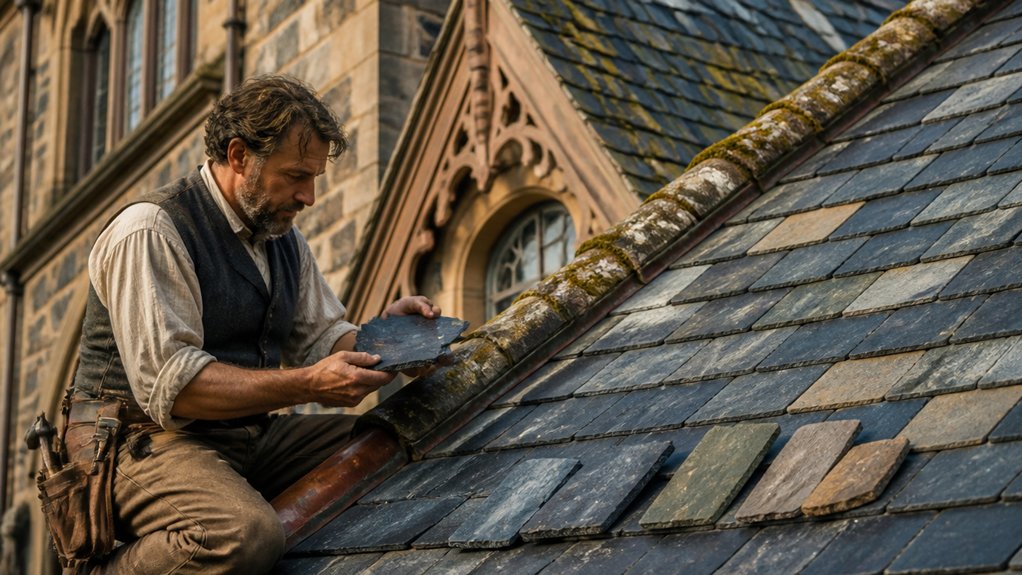
Before replacing any slate, establish what’s already on the roof: inspect the stone’s colour, texture, thickness, cleavage, and surface weathering, along with its size, fixing method, and coursing pattern.
You’ll often find subtle variations that reveal local quarrying, later repairs, or reused material. Compare exposed and sheltered slates, because pollution, lichen, and weathering can alter the original appearance.
Examine broken edges and backs where possible; natural cleavage, grain direction, and tool marks help distinguish traditional slate from modern substitutes.
Record dimensions and gauge across several courses rather than relying on one example. Historical accuracy depends on understanding this evidence before sourcing replacements.
Assess material durability too: dense, evenly cleaved slate should resist delamination, while soft, laminated, or heavily mineral-stained pieces may signal past failure.
Photograph and catalogue each observation for reference.
Check Conservation Rules Before Choosing Slate
Before selecting replacement slate, you’ll need to confirm your building’s heritage requirements and any conservation-area controls.
Consult your local planning authority or conservation officer about permitted materials, coursing, fixings, and roof details. Their guidance will help you source slate that preserves the roof’s historic character while meeting approval requirements.
Confirm Heritage Requirements
If your roof lies within a conservation area or forms part of a listed building, check the applicable heritage controls before selecting replacement slate. Identify the building’s significance, protected elevations, and any historically important roof features, including coursing, diminishing pattern, slate size, colour, texture, and fixing method.
Your survey should distinguish original work from later alterations, because an existing roof doesn’t automatically represent the approved or appropriate appearance. Compare proposed material with surviving historic slates, recording geological character, thickness, surface finish, and weathering.
Heritage compliance depends on preserving character, not simply matching colour. Follow relevant Preservation guidelines, and retain sound slates wherever practicable; selective repair usually causes less harm than wholesale replacement.
Document your findings, specifications, and salvage strategy before ordering materials, so your chosen slate supports the building’s significance.
Consult Planning Authorities
Contact your local planning authority or conservation officer early, before ordering slate, to confirm whether the roof requires listed-building consent, conservation-area approval, or approval under local heritage guidance.
Ask which documents they’ll expect, including photographs, measured roof plans, specifications, and samples showing colour, thickness, coursing, and surface texture.
Review historical documentation, estate records, historic photographs, and previous permissions to establish the roof’s original character and later alterations.
Your proposal should explain why the selected slate matches the building and how you’ll retain significant fabric wherever possible.
Discuss appropriate architectural techniques, including traditional fixing patterns, diminishing courses, random widths, and compatible leadwork.
Don’t assume a readily available reclaimed slate is acceptable; its provenance, dimensions, and condition must support the approved scheme.
Obtain written advice before placing an order, and keep every approval with your project records.
Match Slate Colour, Size, Texture, and Origin
You’ll need to match the existing slate’s colour, including its weathered variation, rather than relying on a superficial visual similarity.
Check dimensions, thickness, surface texture, and edge character so replacement slates integrate with the historic roof covering.
Where possible, source authentic slate from the original regional quarry or geological tradition to preserve the building’s material identity.
Slate Colour Matching
Matching replacement slate isn’t simply a matter of choosing a similar colour; you’ll need to assess its size, surface texture, thickness, weathering, and geological origin alongside the existing roof.
For colour matching, examine sound slates in several roof areas, rather than relying on a freshly exposed sample. Record the dominant hue, secondary tones, iron staining, and evidence of gradual fading.
Acceptable shade variation often contributes to a period roof’s character, while abrupt contrast can make repairs conspicuous. Seek colour consistency across each repair area, but don’t impose uniformity that the historic material never possessed.
Compare dry and damp samples in natural light, and request quarry information or reclaimed-slate provenance where available.
Before ordering, prepare a reference board and obtain conservation approval, particularly on listed buildings or within a sensitive historic streetscape.
Size and Texture
Colour provides only part of the match; the replacement slate must also correspond in size and texture. Measure exposed length, width, thickness, and gauge from sound courses, allowing for laps and diminishing patterns.
Choose slates whose surface character—smooth, riven, dressed, or naturally weathered—sits convincingly beside the retained covering. Avoid uniform, machine-cut replacements where irregular edges and subtle thickness variation define the period roof’s appearance.
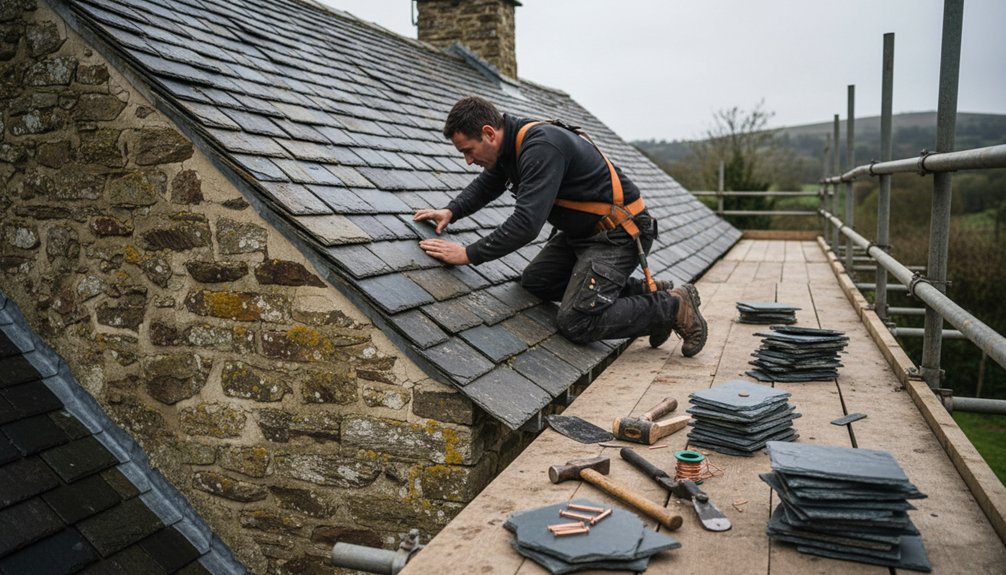
Before slate installation, sort each batch by dimensions and inspect it for delamination, cracks, and excessive brittleness. Match hole positions and fixing methods to the existing work, using compatible nails or traditional hooks where appropriate.
Record your selection for future roofing maintenance, so later repairs don’t introduce mismatched sizes or textures. Lift sound slates carefully, retain reusable examples, and keep replacement work visually subordinate to historic fabric.
Authentic Regional Origin
When sourcing replacement slate, confirm its regional origin as well as its colour, size, and texture, because local geology and historic quarrying methods give each roofing tradition a distinctive character. Examine the existing roof, archived specifications, and quarry records before ordering material.
Don’t assume a similar-looking slate will perform or weather similarly; mineral composition, cleavage, density, and absorption vary between districts. Ask suppliers to document the quarry, extraction date, grading, and provenance, and check these details against recognised Slate sourcing standards.
Where the original quarry remains active, prioritise its slate; otherwise, select a compatible regional substitute and record your reasoning for future maintenance. Respecting Regional craftsmanship helps preserve coursing, diminishing patterns, fixing traditions, and the roof’s visual continuity without introducing anachronistic material.
Compare Reclaimed and Newly Quarried Slate
Reclaimed slate preserves the character of an older roof, while newly quarried slate offers consistent sizing, performance, and supply. Choose reclaimed pieces when matching an existing covering, preserving patina, and retaining evidence of historical craftsmanship matter most.
Expect varied dimensions, weathering, nail holes, and greater sorting effort; you’ll need your roofer to assess each slate and adapt coursing carefully.
Newly quarried slate can provide uniform thickness, reliable strength, and efficient cutting for modern installation. It may suit a substantial repair where reclaimed quantities prove insufficient, but select a colour, texture, and finish that respect the period roof rather than creating an obviously new patch.
Compare weight, porosity, thickness, and expected service life against the existing slates. You’ll protect historic fabric best by reusing sound originals first, then introducing compatible new material only where necessary.
Verify Slate Suppliers’ Provenance and Quality
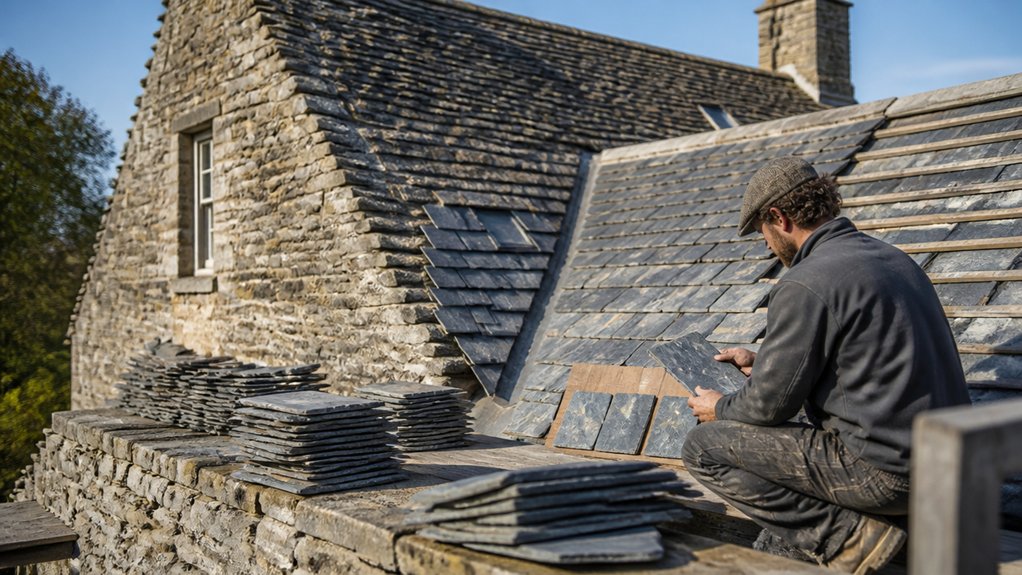
Before you commit to a supplier, verify where the slate was quarried or recovered and how its condition has been assessed. Request quarry names, recovery records, geological descriptions, and photographs showing thickness, texture, colour variation, and edge condition.
For reclaimed material, ask how it was removed, stored, sorted, and tested. Careless handling can conceal delamination, nail damage, or frost-related weakness.
Inspect representative samples rather than relying solely on catalogue images, and confirm that sizes, holes, and dressing suit your period roof.
A reputable merchant should explain grading criteria, provide consistent batch information, and identify any substitutions.
Check references from conservation projects, review the supplier reputation, and seek evidence of Slate craftsmanship in trimming, sorting, and packing.
Keep invoices and provenance statements with your project records for future custodians.
Plan a Durable Period-Roof Replacement
A durable period-roof replacement begins with a condition-led plan that preserves sound historic fabric wherever possible. Survey the roof structure, battens, underlay, fixings, flashings, and junctions before specifying work.
You should record slate sizes, coursing, exposure, gauge, headlap, and existing fixing methods, then match replacements to these established patterns. Retain repairable slates and replace only defective units, avoiding unnecessary stripping that can erase evidence of earlier phases.
For Historical restoration, select compatible natural slate with proven Material durability, appropriate density, thickness, and frost resistance. Confirm that the supporting structure can carry the renewed covering and improve ventilation discreetly where moisture threatens longevity.
Detail valleys, abutments, verges, and ridge joints to shed water without compromising character. Agree samples, fixing schedules, and inspection points with your conservation professional before work begins.
Conclusion
Authentic slate replacement isn’t simply a matter of matching colour. The theory that reclaimed slate is always the most historically accurate sounds convincing, but evidence from quarry records and roof surveys shows that regional geology, working methods, and fixing details matter just as much. You’ll protect your period roof best by documenting existing slates, checking conservation requirements, and sourcing proven material. Whether reclaimed or newly quarried, choose compatible slate and skilled workmanship over appearance alone.