Restoring and reinstalling a period fireplace means protecting its historic character without overlooking modern safety rules. You’ll need to assess the fireplace, chimney, flue, structure, and ventilation before removing or repairing anything. Check heritage permissions and building requirements, use compatible materials, and plan upgrades that remain discreet. A qualified professional must inspect, install, test, and certify the completed work—but the most important decisions often arise before restoration begins.
Key Takeaways
- Document the fireplace’s condition, heritage status, materials, dimensions, and proposed changes before starting restoration.
- Obtain listed-building consent, planning permission, Building Regulations approval, and other required permissions in writing.
- Have qualified professionals inspect the structure, chimney, flue, ventilation, hearth, clearances, and appliance compatibility.
- Use matching, breathable materials and reversible repairs while protecting original masonry, tiles, grates, surrounds, and decorative features.
- Employ registered installers, complete safety testing, obtain certification, and maintain carbon-monoxide alarms and the fireplace regularly.
Plan Your Period Fireplace Restoration
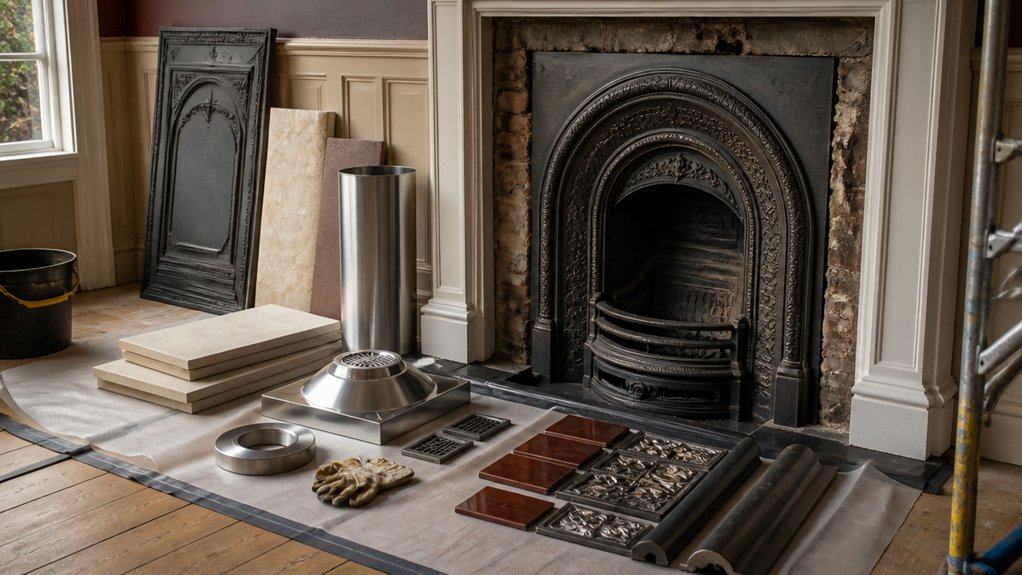
Begin by documenting the fireplace’s existing condition, including its age, materials, dimensions, damage, and any surviving decorative features.
Then establish the building’s heritage status and consult applicable conservation policies, building regulations, and manufacturer requirements before you design the work.
Define whether you’ll retain, repair, relocate, or recreate each component, and record proposed changes in drawings, photographs, and a written schedule.
Set performance objectives for structural support, fire safety, ventilation, clearance, emissions, and energy efficiency without compromising significant fabric.
Pursue Historical accuracy by researching period construction methods, profiles, finishes, and approved alterations.
Plan Material sourcing early, prioritizing reclaimed or compatible brick, stone, tile, timber, and lime-based products with documented provenance.
Obtain required permissions, appoint qualified tradespeople, budget for contingencies, and agree inspection points with the relevant authority before work begins.
Don’t remove original elements until your plan is approved.
Inspect the Fireplace and Chimney
Inspect the firebox, hearth, breast, and surrounding masonry for movement, cracking, damp, or heat damage before disturbing historic fabric.
You’ll need a qualified professional to assess structural stability and identify repairs that preserve original materials.
Check that the chimney, liner, ventilation, clearances, and proposed appliance meet current building and fire-safety regulations.
Assess Structural Condition
Before planning any restoration, determine whether the fireplace and chimney are structurally sound and comply with current safety requirements. Ask a qualified building professional to examine the hearth, fireback, lintel, cheeks, breast, and surrounding masonry.
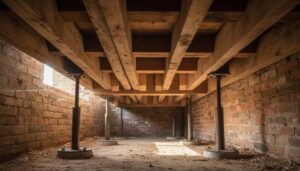
Look for cracked bricks, bulging walls, loose joints, damp staining, settlement, and signs that previous alterations weakened the structure. Check timber floors, joists, and nearby finishes for heat or moisture damage, and confirm that the fireplace bears safely on an adequate foundation.
Don’t remove original fabric until you’ve recorded it and understood its structural role. Where defects appear, obtain a written repair specification and any required approvals before work starts.
Use compatible mortar and reclaimed materials where appropriate, balancing Historical accuracy with safe, durable aesthetic restoration. Document every finding for your contractor and conservation officer.
Check Chimney Compliance
Once the structure is stable, have a qualified chimney professional verify that the flue, chimney height, terminals, liners, ventilation, and clearances comply with current building and fire-safety regulations.
Ask for a written inspection covering cracks, damp, blockages, leakage, and the chimney’s connection to the fireplace.
You’ll need a suitable liner if the existing flue is unsafe, incorrectly sized, or incompatible with your chosen fuel.
Confirm that the hearth projects far enough, combustible materials remain separated, and carbon-monoxide alarms meet local requirements.
Don’t remove historic fabric unnecessarily; document original brickwork, mantels, pots, and finishes before making changes.
Where upgrades are essential, conceal them sensitively to preserve Historical authenticity.
Coordinate technical work with aesthetic restoration, and obtain listed-building, conservation-area, or building-control approvals before installation.
Retain certificates for future inspections and resale.
Confirm Permissions and Building Requirements
Before altering the fireplace, check whether you need planning permission, particularly in a listed or conservation-area property.
Review building regulations for structural work, ventilation, flues, and fire safety, and consult your local authority before starting.
Check Planning Permission
Check whether you need planning permission, listed-building consent, or approval under Building Regulations before altering the fireplace or chimney. Contact your local planning authority with photographs, address details, and a clear description of the proposed work.
If your property is listed, don’t remove, reposition, expose, or replace historic fabric without written listed-building consent; even seemingly minor changes may require it. In a conservation area, external alterations, including chimney-pot replacements or new terminals, may also need permission.
Ask the authority whether permitted development rights apply, and obtain confirmation in writing rather than relying on assumptions. Consult your conservation officer early, particularly where historical accuracy and aesthetic restoration guide the design.
Keep permissions, drawings, and correspondence with the project records. Don’t begin work until every required consent is formally granted.
Review Building Regulations
Building Regulations may apply even when planning permission isn’t required, particularly if you’re opening, altering, relining, or rebuilding a chimney, fireplace recess, hearth, or flue.
Check the requirements for structural stability, combustion air, chimney height, flue performance, hearth dimensions, and carbon-monoxide protection before work begins.
You’ll need suitable ventilation where a modern appliance draws air, and you must keep combustible materials safely separated from heat sources.
Use a competent installer to inspect and test the flue, then retain certificates, photographs, and product details for your records.
Protect Historical accuracy by matching the original opening and proportions without compromising current safety standards.
Confirm Material sourcing for bricks, stone, mortar, and liners, ensuring each product is compatible, certified, and appropriate for the building’s age and construction.
Don’t conceal defects before inspection.
Consult Local Authorities
Local authority advice can clarify whether your fireplace project needs planning permission, listed-building consent, conservation-area approval, or only Building Regulations compliance. Contact your council’s planning and building-control departments before removing fabric, altering the chimney, or installing a new appliance.
Provide photographs, drawings, measurements, and details of proposed ventilation, flue lining, hearth construction, and carbon-monoxide protection.
If the property is listed, ask whether an archaeological or conservation officer must review the work. Explain your restoration aims and demonstrate historical accuracy through period-appropriate proportions, finishes, and construction methods.
Confirm acceptable material sourcing, especially for reclaimed brick, stone, tiles, ironwork, and lime mortar. Request written guidance, identify required applications, and keep approvals with your project records.
Don’t start demolition until you understand inspection stages, approved materials, and completion-certificate requirements.
Repair Period Materials Safely
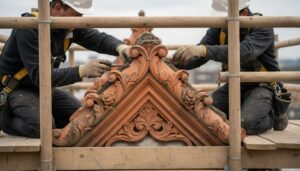
Before repairing period masonry, identify the original brick, stone, mortar, plaster, and metalwork so you can match their composition and appearance without compromising historic fabric.
Historical accuracy matters: test samples where necessary, record existing conditions, and retain sound material instead of replacing it unnecessarily.
Use compatible, breathable lime mortar for historic masonry unless your conservation officer or building regulations require another specification. Don’t use hard cement mortar, which can trap moisture and damage softer bricks or stone.
Remove defective joints by hand, limiting vibration and dust, and protect surrounding finishes.
Rebuild missing sections with reclaimed or accurately matched units, keeping original coursing and tooling.
For metalwork, clean gently, repair rather than discard, and apply approved heat-resistant coatings only after checking manufacturer and heritage requirements.
Document every intervention for future maintenance.
Match the Fire, Flue, and Ventilation
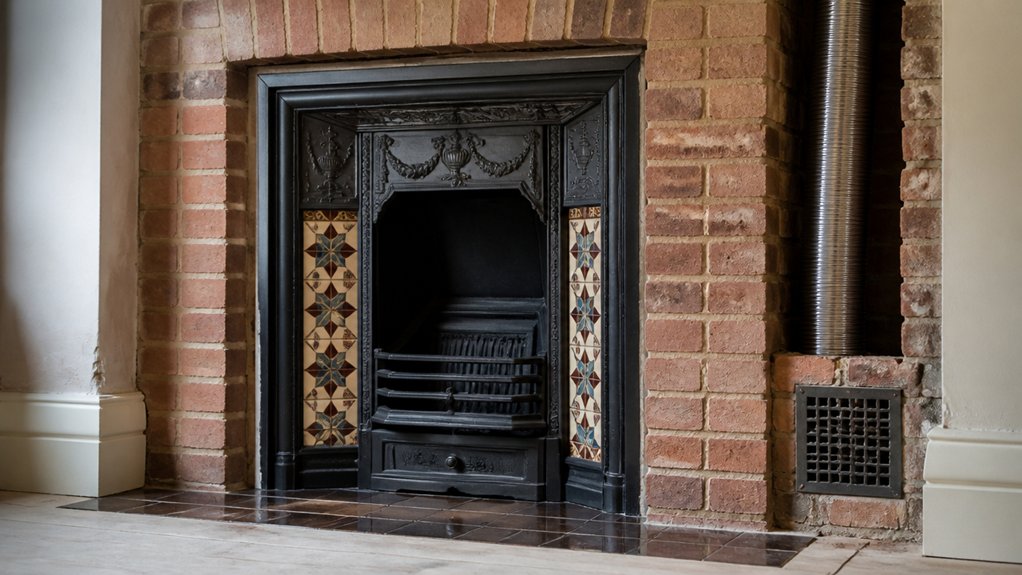
Match the replacement fire to the existing flue, chimney, and room ventilation so the system operates safely without altering the building’s historic character.
Confirm the appliance’s fuel type, heat output, and manufacturer requirements suit the flue’s diameter, height, route, and lining.
Don’t assume a sound-looking chimney provides adequate draught or gas-tightness; account for bends, shared flues, and blocked openings.
Check national and local rules for permanent air inlets, carbon-monoxide protection, and minimum clearances around combustible floors, walls, and mantels.
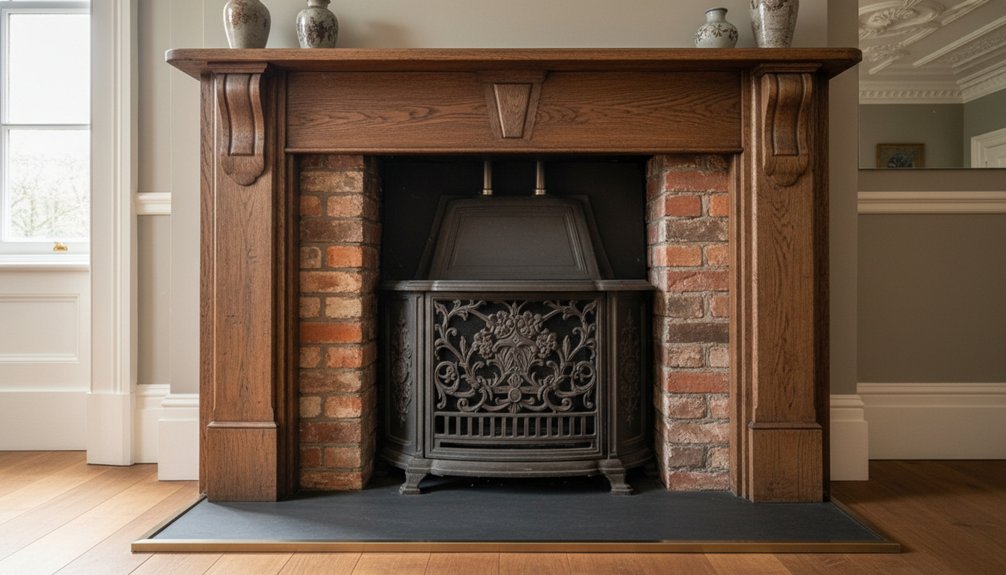
Preserve original bricks, tiles, grates, and surrounds wherever possible, using reversible adaptations rather than cutting historic fabric.
Historical accuracy should guide the visible installation, while Material preservation governs every concealed alteration.
Ask a qualified chimney professional to assess compatibility and specify suitable liners, terminals, and ventilation without proceeding to commissioning.
Install, Test, and Certify the Fireplace
Once the compatibility assessment is complete, have a qualified, appropriately registered professional install the fireplace in accordance with the manufacturer’s instructions, approved specifications, and applicable building, gas, electrical, and fire-safety regulations.
Verify the installer protects original masonry, surrounds, hearths, and decorative details while preserving Fireplace aesthetics and historical accuracy.
Require proper flue connections, ventilation, clearances, carbon-monoxide protection, and any necessary structural or electrical work.
Before use, have the professional inspect joints, seals, liners, dampers, and combustion air paths.
Test the appliance, chimney performance, ventilation, safety controls, and carbon-monoxide levels under operating conditions.
Keep written records of calculations, products, test results, photographs, and approvals.
Obtain required building-control, gas, or solid-fuel certification, and retain documents with the property records.
Don’t light the fireplace until certification is complete.
Conclusion
By planning carefully, you’ll protect both heritage character and household safety. Inspect the structure, confirm permissions, and repair original materials with compatible methods rather than compromising them. Then match the appliance, flue, and ventilation to current requirements, using qualified professionals where certification is required. Why preserve a beautiful fireplace if it can’t operate safely? Once installed, document the work, complete testing, and retain certificates—so your restored feature remains compliant, efficient, and ready for responsible use.