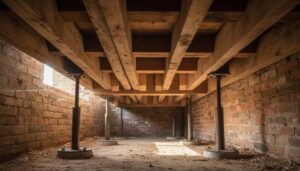

If your Edwardian brickwork is showing a little unwanted character, penetrating damp may be the cause. You’ll need to confirm the diagnosis before disturbing historic finishes, then trace water ingress through the roof, gutters, openings and masonry. With careful repairs and breathable materials, you can protect the wall’s fabric and prevent recurrence. Start by distinguishing penetrating damp from condensation or rising damp, because the wrong treatment can conceal a more serious defect.
Key Takeaways
- Inspect walls, interiors, roofs, gutters, pointing, windows, and downpipes to identify and confirm the penetrating damp source.
- Record staining, cracks, salts, moisture readings, and environmental conditions before disturbing Edwardian masonry or historic finishes.
- Repair defective rainwater goods, flashings, joints, cracks, and damaged bricks using compatible, breathable lime-based materials.
- Remove only loose render or paint, allowing exposed brickwork to dry fully before applying lime render or mineral coatings.
- Repaint with vapour-permeable finishes, improve ventilation, and monitor repaired areas after rainfall to confirm lasting dryness.
Confirm the Damp Is Penetrating Damp
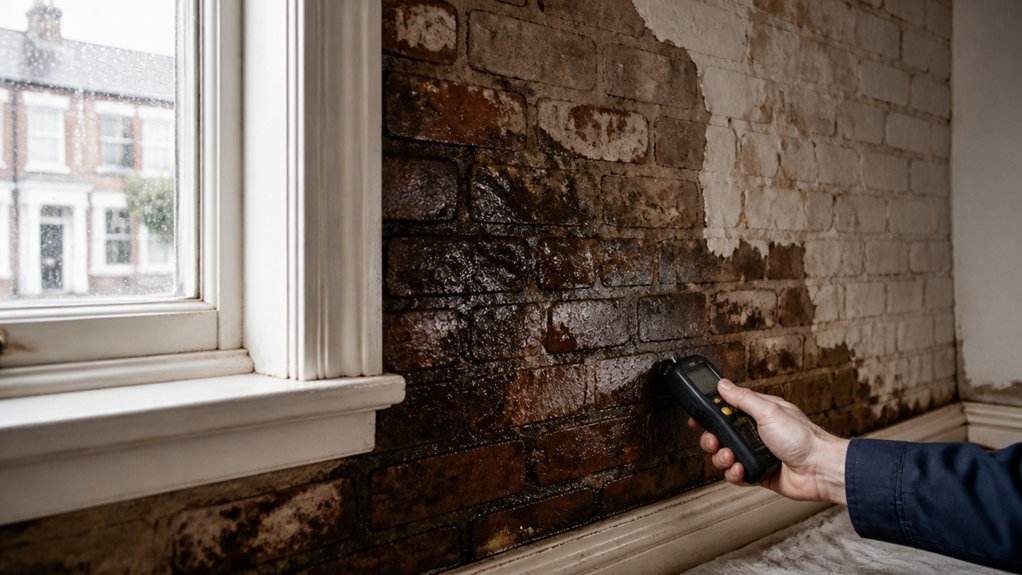
Before repairing an Edwardian brick wall, confirm that the moisture is penetrating damp rather than rising damp, plumbing leakage, or condensation.
Start with a visual survey, recording staining, blistered paint, salt deposits, soft mortar, and damaged plaster. Penetrating damp often produces localised, irregular patches that worsen after rain, while rising damp typically forms a more consistent band near the floor with tide marks and salts.
Don’t rely on appearance alone. Use calibrated moisture testing at several heights and compare readings across affected and unaffected masonry; remember that salts can distort electrical meters.
Check indoor humidity and ventilation, and note whether condensation appears on cold surfaces. For mold identification, distinguish surface mold, usually linked to persistent humidity, from damp-related fungal growth beneath finishes.
Preserve original fabric, and document findings before selecting compatible repairs.
Find the Source of Water Ingress
Trace the external brickwork for open joints, cracked bricks, failed pointing, and saturated areas where rain may enter.
Check gutters, outlets, and downpipes for leaks, blockages, or misdirected discharge against the wall.
You’ll then have a clearer indication of whether defective fabric or rainwater goods are driving the damp.
Inspect External Brickwork
Start by inspecting the Edwardian wall’s exposed brickwork in dry daylight, paying particular attention to cracked or open joints, spalled bricks, failed pointing, and gaps around window and door frames.
Trace staining, salt deposits, algae, and darkened areas, marking their height and pattern on a simple elevation sketch.
Check whether cracks follow individual bricks, beds, or openings; stepped cracking may indicate movement, while localised decay often signals prolonged wetting or incompatible repairs.
Record brick deterioration with dated photographs and note patches of hard cement pointing, render, or paint that could trap moisture in the solid wall.
Where repairs appear historic, arrange mortar analysis before removing material. A conservation specialist can match the original lime mortar’s composition, strength, colour, and permeability.
Don’t rake out sound joints unnecessarily; isolate defects and plan breathable, like-for-like repairs.
Check Gutters and Downpipes
Once the brickwork has been assessed, inspect the roof drainage serving the affected elevation. Check gutters for splits, rusted joints, loose brackets, and accumulated moss or silt. During wet weather, watch for overflow at corners; even minor discharge can saturate Edwardian solid brickwork and drive moisture through lime mortar.
Prioritise careful Gutter maintenance rather than replacing historic profiles unnecessarily. Clear debris by hand, retain sound cast iron where possible, and repair joints with compatible materials. Avoid cement-rich patches that trap moisture or damage original fabric.
Complete a Downpipe inspection from hopper to shoe. Look for open joints, blockages, staining, and water discharging against the wall or foundation. Confirm that shoes direct water away from the elevation.
Test repaired sections with a hose, then allow the masonry to dry before reassessing internal damp.
Inspect Gutters, Roofs, Windows and Doors
Inspect the roofline and rainwater goods first, as Edwardian brickwork is especially vulnerable when failed slates, blocked gutters, or leaking downpipes discharge water against the wall.
During gutter maintenance, remove debris, check joints, and confirm that outlets and downpipes discharge freely into sound drainage.
Arrange a careful roof inspection to identify slipped slates, defective flashings, damaged valleys, and porous chimney details.
Next, examine window and door openings. Look for cracked or open perimeter sealant, failed putty, decayed timber, defective sills, and gaps around frames that admit wind-driven rain.
Check that original joinery remains adequately painted, while preserving breathable coatings and traditional details.
Use a hose test sparingly, section by section, to trace entry points without saturating the masonry.
Record findings before commissioning targeted repairs or access equipment.
Repair Pointing, Bricks and Masonry Cracks
Repair defective pointing with a compatible lime-based mortar, not a hard cement mix that can trap moisture and damage softer Edwardian bricks. Rake out loose joints carefully, limiting removal to sound mortar, then dampen the masonry before repointing in layers. Match the existing joint profile and finish, allowing adequate curing without rapid drying.
For isolated brick damage, replace units with reclaimed or accurately matched bricks of similar porosity, size, and colour. Don’t use dense engineering bricks, which can redirect moisture into surrounding fabric.
Investigate masonry cracks before filling them: record their width, direction, and location, and check whether they’re stable. Hairline, static cracks may accept a compatible lime mortar repair, while widening, stepped, or recurring cracks need structural assessment.
Preserve sound historic material wherever possible, and monitor repaired areas after wet weather.
Remove Damaged Render and Paint
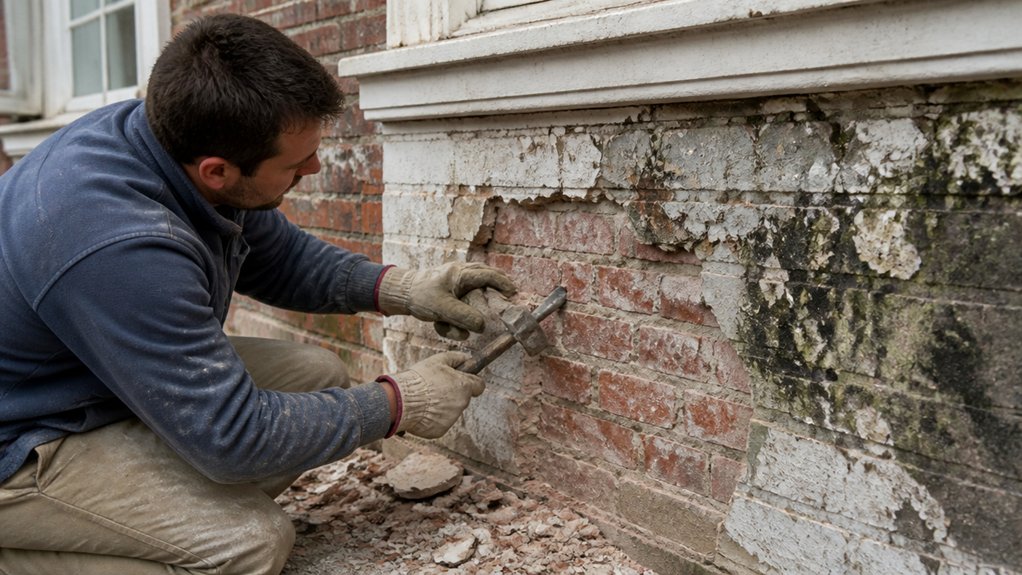
After addressing defective pointing, bricks, and cracks, remove loose or blistered render and failing paint so the wall can dry and reveal the masonry beneath. Work carefully by hand, using a scraper, stiff brush, and small bolster where necessary; avoid aggressive power tools that could scar soft Edwardian bricks.
When removing paint, contain dust and flakes, particularly if several historic coatings may contain lead, and follow appropriate safety controls.
Tap the render to identify hollow areas, then cut back only unsound material to a firm edge. Don’t widen sound joints or damage arrises around openings.
Brush away debris and allow the exposed wall to dry fully before repairing render.
Photograph surviving details and retain sound historic finishes where they remain well bonded, as they may help guide accurate local repairs.
Use Breathable Render and Exterior Paint
Choose a lime-based breathable render suited to your Edwardian brickwork, then finish it with mineral exterior paint to let moisture escape.
Maintain these permeable finishes by repairing cracks and renewing them with compatible materials rather than sealing the wall with cement or masonry paint.
Choose Breathable Render
For Edwardian brickwork, breathable lime render and vapour-permeable exterior paint let moisture escape without trapping it inside the wall. Before specifying either, check the existing finish and repair leaking gutters, defective pointing, and open cracks.
Breathable render benefits include reduced moisture retention, compatibility with soft historic bricks, and less risk of frost damage or salt staining.
Choose breathable render materials carefully. A traditional lime render, such as a hydraulic or non-hydraulic lime mix suited to your exposure, remains more appropriate than dense cement render. Match its strength to the masonry: the render should sacrifice itself rather than force movement into fragile bricks.
Remove cement coatings cautiously, preferably after testing a small area, and allow the wall to dry gradually. Use a qualified conservation plasterer to assess salts, detailing, and local weather conditions before application.
Apply Mineral Exterior Paint
Once the lime render has cured, apply a mineral silicate paint that bonds chemically with the surface while remaining highly vapour-permeable. Choose a colour and formulation compatible with the building’s Edwardian character, and confirm the manufacturer approves it for lime render.
Don’t use acrylic, masonry polymer, or elastomeric products; these can trap moisture within the solid brick wall. Brush off dust and friable particles, then follow the specified dilution and priming instructions.
Apply two thin, even coats with a block brush, allowing the first to cure fully before adding the second. Work in dry, mild weather, protecting the façade from direct sun, rain, and frost.
Mineral exterior paint forms one of the most suitable Breathable coatings for historic masonry, preserving vapour movement without sacrificing weather resistance.
Maintain Breathable Wall Finishes
To maintain a dry, durable Edwardian brick wall, keep both the render and exterior paint vapour-permeable throughout their service life. Choose lime render or another compatible mineral finish, rather than dense cement render, which can trap moisture and accelerate frost damage in soft, porous bricks.
Select silicate, limewash, or other Breathable coatings that allow vapour to escape while shedding driving rain.
Before repainting, remove flaking layers carefully and check that the substrate is sound, clean, and adequately cured.
Don’t seal cracks or junctions with impermeable fillers; use compatible lime-based repairs instead.
Maintain wall ventilation by keeping air bricks, weep holes, and ground-level drainage clear.
Inspect finishes annually, especially after severe weather, and renew them before widespread failure exposes the brickwork.
Always match materials to the building’s historic fabric and test a small area first.
Dry, Replaster and Repaint the Interior
Let the Edwardian brickwork dry thoroughly before replastering, as trapped moisture can damage finishes and encourage salts to reappear. Improve ventilation and gentle background heating, but avoid rapid drying, which can stress masonry and drive salts towards the surface.
Check wall moisture with a suitable meter and wait until readings stabilise at an appropriate level for your plaster system. Brush away loose deposits, then repair joints and apply a compatible, vapour-permeable renovating plaster; don’t use dense gypsum or cement that could trap moisture in the solid wall.
Allow each coat to cure fully before applying the next. Choose a mineral or limewash finish that lets the fabric breathe, matching the original character. If you’re considering interior insulation, resolve moisture movement first and retain adequate ventilation.
Repaint only when the surface is dry, sound, and salt-free.
Decide When to Call a Damp Specialist
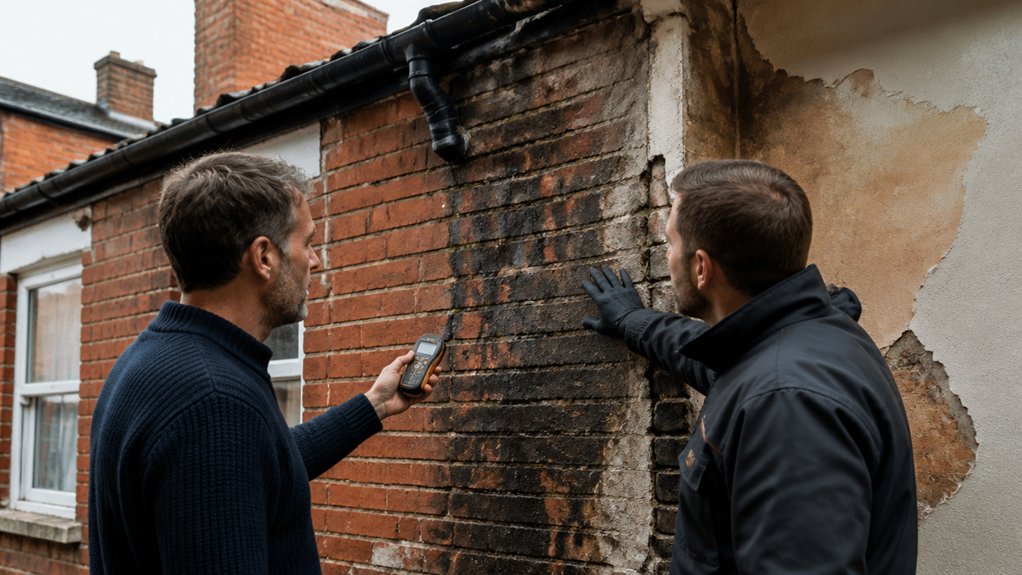
Call a damp specialist when moisture persists after straightforward repairs, returns despite improved ventilation and compatible finishes, or appears alongside structural cracking, salt contamination, or suspected rising or penetrating damp.
Edwardian solid brickwork needs diagnosis before intervention: ask for moisture mapping, rainwater-goods inspection, mortar evaluation, and a clear distinction between penetrating, rising, and condensation-related damp.
When examining DIY feasibility, restrict yourself to safe maintenance, such as clearing gutters, renewing defective seals, or removing impermeable paint where appropriate.
Don’t inject chemicals, tank walls, or repoint with hard cement without professional advice; these measures can trap moisture and damage historic fabric.
Choosing specialist contractors requires checking conservation experience, references, insurance, and proposed materials.
Insist on a written scope, independent moisture evidence, and repair methods compatible with lime mortar and breathable finishes.
Conclusion
By following these careful steps, you’ll tackle penetrating damp without compromising your Edwardian home’s character. Confirm the cause, correct defective gutters, roofs, pointing and masonry, then remove impermeable coatings and choose breathable repairs. Allow the wall to dry fully before replastering and repainting with compatible materials. Remember, patience protects period fabric: persistent moisture, hidden defects or uncertain diagnosis deserves professional assessment. With sympathetic maintenance and sensible ventilation, you’ll preserve solid brickwork and prevent damp’s return.