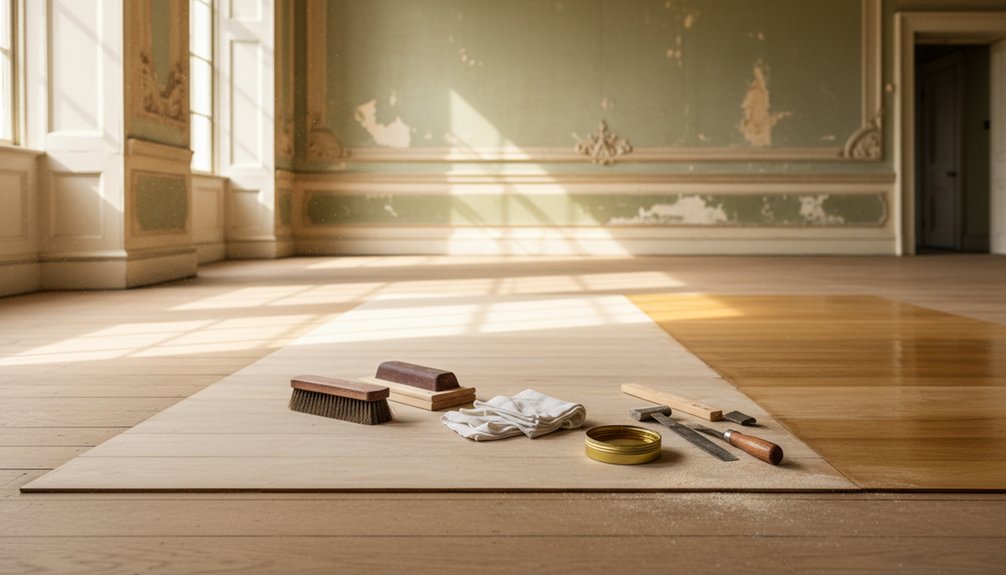
If you’re caring for original wooden floors in a period home, start by preserving what makes them valuable: their timber, wear patterns, and aged patina. Check the boards for movement, historic finishes, and protruding nails before you clean or sand. Use gentle methods, breathable materials, and plenty of restraint, since aggressive treatment can remove more than dirt. The right sequence matters, and the first inspection often determines how much work the floor truly needs.
Key Takeaways
- Inspect and document original boards, timber species, repairs, stains, movement, and historic finishes before beginning any work.
- Clean gently with a soft brush, vacuum, barely damp cloth, and pH-neutral cleaner; avoid flooding, steam, bleach, and abrasives.
- Sand only when necessary, securing loose boards and nails first; use fine abrasives to preserve patina and character.
- Choose a breathable, low-sheen timber oil, test compatibility discreetly, and avoid glossy moisture-trapping sealers.
- Apply thin oil coats along the grain, remove excess, allow full curing, and maintain with gentle cleaning and prompt spill removal.
Check Your Original Wooden Floor First
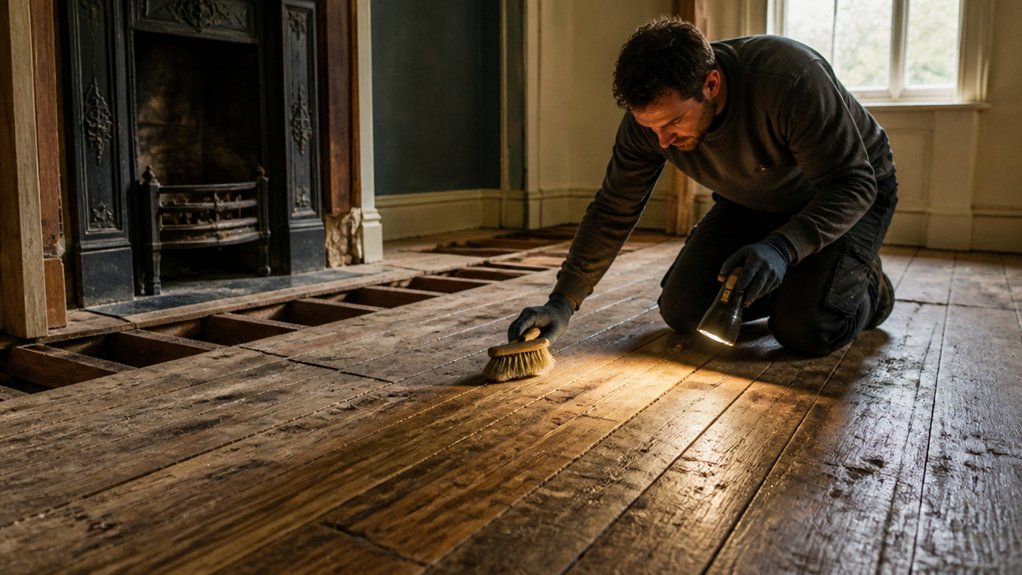
Before you clean, sand or re-oil, inspect the floor carefully to understand what you’re working with. Look for original boards, later replacements, filled joints, old nails, stains, cupping, splits, and areas weakened by damp or woodworm.
Check whether boards run beneath skirting boards, fireplaces, or fitted cupboards; these details can reveal historic phases and guide floorboard restoration. Note the timber species, board widths, saw marks, patina, and surviving finishes, since aggressive alteration may reduce historical accuracy.
Test loose boards gently, but don’t pry up sound timber or remove embedded fixings unnecessarily. Photograph each room and mark repairs on a simple plan.
If you find structural movement, decay, asbestos-containing materials, or uncertain coatings, pause and seek specialist advice before choosing any treatment. Record everything before proceeding.
Clean Original Floorboards Without Damage
Once you’ve recorded the floor’s condition, remove loose grit and surface dust with a soft brush or a vacuum fitted with a non-abrasive floor head. Work along the boards, not across them, and lift grit rather than dragging it into the grain.
Dampen a soft cloth with clean water and wipe small sections, immediately drying each area. For ingrained dirt, use a pH-neutral wood-floor cleaner sparingly; never flood boards or allow moisture into open joints. Test every product beneath furniture first.
Approach stain removal cautiously: blot spills, avoid bleach and abrasive pads, and consult a conservation specialist before treating historic pigments or dark marks.
Traditional polishing techniques should remain gentle; use a suitable breathable wax only if the existing finish permits it. Don’t use steam, silicone sprays, or household detergents, which can damage aged timber and finishes.
Sand Original Wooden Floors Carefully
Sand original floorboards only when cleaning won’t recover their appearance and the remaining finish is stable enough to remove safely. In a period home, inspect every board first: nails, loose edges, historic paint, worm damage, and uneven repairs can all affect your approach. Remove protruding nails, secure movement, and replace only dangerously weakened sections.
Use a floor sander sparingly, beginning with the finest abrasive that can level the surface. Keep the machine moving to prevent hollows, and finish edges by hand rather than cutting into skirtings. Don’t chase every stain or mark; these traces often provide character and evidence of the floor’s history.
Vintage restoration depends on restraint, not a flawless, uniform surface. Avoid aggressive stripping intended for Modern finishes, which can thin original boards and erase valuable patina. Vacuum thoroughly before finishing.
Choose an Oil for Your Floorboards
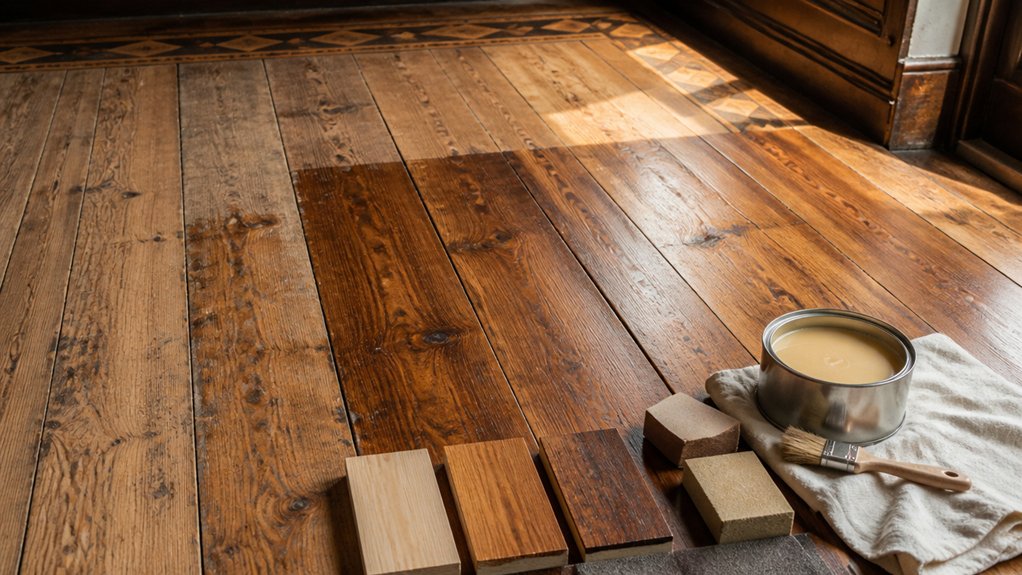
Choose a breathable floor oil formulated for timber, with a sheen and colour that suit the age and character of your boards. Period floors usually benefit from a low-sheen, natural-looking finish rather than a glossy modern coating.
Compare wood finish options carefully: hardwax oils offer durable protection, while traditional penetrating oils can preserve a softer, more authentic appearance.
Check that the product suits your timber species and any historic stain; test your choice on an inconspicuous board before committing.
If sustainability matters, look for eco-friendly oils made with plant-based ingredients and low VOCs, but verify their performance and maintenance requirements.
Avoid products that seal the wood completely, trap moisture, or create an obviously contemporary surface.
Read the manufacturer’s guidance and choose a compatible colourless or lightly tinted formulation.
Apply the Oil and Maintain the Finish
With the boards clean, dry and lightly abraded, apply the oil in thin, even coats along the grain, working in manageable sections. Use a lint-free cloth, pad, or suitable brush, and follow the manufacturer’s drying times.
Good Oil application techniques prevent pooling, which can leave dull patches or a sticky surface. After the oil has penetrated, wipe away every surplus before it dries.
Apply a second coat only if the product and timber require it; original boards often benefit from restraint rather than a heavy, modern sheen.
Allow thorough curing before replacing rugs or furniture.
For Furniture protection, fit felt pads to chair and table legs, lift rather than drag, and use breathable mats at entrances.
Dust regularly, wipe spills promptly, and refresh worn traffic lanes with compatible oil. Never saturate the floor.
Conclusion
Your original floor is more than a surface—it’s a timeworn record of your home’s story. Treat it gently: inspect boards first, clean with minimal moisture, sand only where necessary, and choose a breathable, low-sheen oil that respects the timber’s age. Apply thin coats along the grain, allow full drying, and maintain the finish with regular dust removal and prompt attention to spills. With patient care, you’ll preserve both its character and lasting performance for years to come.