

Before you arrange a viewing in Harlow, you’ll want to look beyond the property’s polished first impression, particularly where an older home may need thoughtful restoration. Ask how the asking price compares with recent local sales, what features justify it, and why the seller is moving. Clarify the listing history, offers, condition, running costs, planning matters, and local risks—because one overlooked detail could change your view entirely.
Key Takeaways
- How does the asking price compare with recent sales and similar current listings in this Harlow neighbourhood?
- How long has the property been listed, and have there been any previous price reductions or relaunches?
- Why is the seller moving, and how flexible are their preferred completion and offer timescales?
- Have any offers been received, and how many viewings or repeat visits are currently scheduled?
- Are there known structural, damp, roof, planning, listed-building, or other defects requiring investigation?
How Does the Price Compare in Harlow?

Ask how the property’s price compares with recent sales and current listings in Harlow, particularly for similar homes in the same neighbourhood. Request a clear Market comparison, not a broad figure covering unlike properties. You’ll want the agent to separate renovated period houses from homes needing rewiring, damp treatment, roof repairs, or sympathetic upgrades.
Ask which features support the asking price: original joinery, fireplaces, plot size, parking, insulation, and planning potential. Discuss Pricing strategies too, including whether the seller has priced competitively, left room for negotiation, or tested the market above likely value.
Check how long comparable properties took to sell and whether their final prices changed. If the valuation relies on recent improvements, ask for evidence of quality and cost, especially where heritage details require specialist workmanship and approval.
Why Is the Seller Moving?
Once you’ve tested the asking price against comparable sales, find out why the seller is moving. Their answer can reveal practical context that photographs and particulars won’t show. Ask whether they’re relocating for work, upsizing, downsizing, settling an estate, or responding to changing family needs.
These seller motivations may explain a firm deadline, recently completed improvements, or a willingness to negotiate on fixtures.
Probe gently about the moving reasons and whether the owners have lived there long enough to understand its quirks. In a Victorian terrace, for example, ask if maintenance demands, damp, inefficient heating, or conservation considerations influenced their decision.
For a renovated period home, establish which works they commissioned and which problems remain. You’re not seeking gossip; you’re evaluating fit, likely costs, and the care behind the property’s presentation before booking your viewing.
How Long Has the Property Been Listed?
Find out how long the property has been listed, as the marketing history can reveal more than the current particulars suggest. Ask when the listing first appeared, whether it has been withdrawn and relaunched, and whether the asking price has changed.
A lengthy Listing duration may indicate overpricing, difficult defects, restrictive covenants, or work that discourages buyers, particularly in older Harlow homes requiring sensitive renovation.
Request a Market comparison with similar local properties, considering tenure, floor area, conservation-area status, period features, and condition rather than relying on headline prices. You’ll gain a clearer sense of whether the property sits realistically within its segment.
Also ask whether the photographs and description have been updated; dated marketing can conceal completed improvements, while unchanged wording may overlook issues such as damp, outdated wiring, or roof repairs.
Are There Any Offers or Viewings?
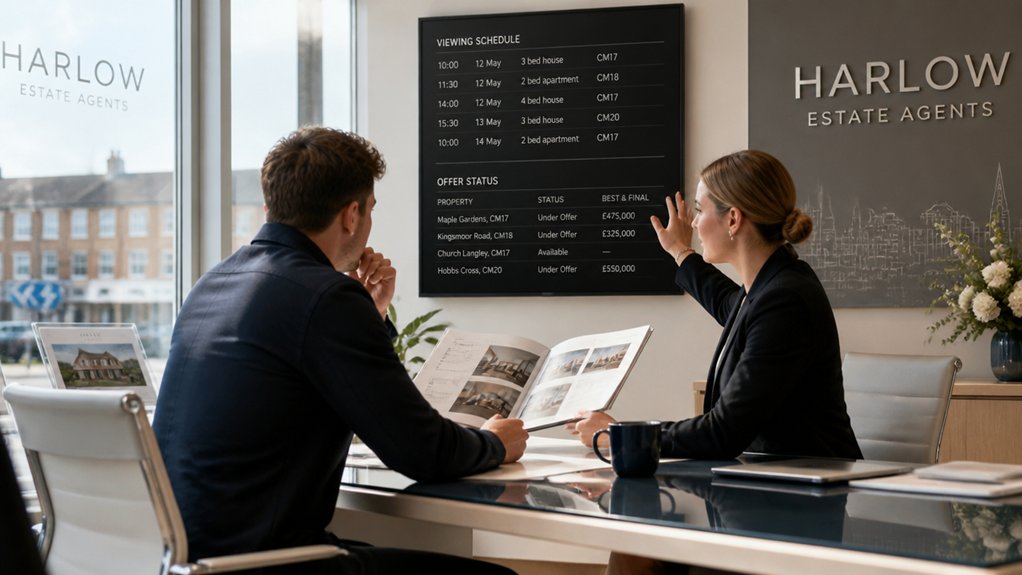
Ask whether the seller has received any offers, and clarify their terms, conditions, and strength.
Find out how many viewings are scheduled, including repeat visits that may signal serious interest.
This insight helps you judge competition before committing to a period property with renovation demands.
Existing Offers
Are there any offers on the property, or have viewers shown serious interest? Ask whether an offer is proceedable, subject to finance, or dependent on selling another home. You’ll want to know if the seller has accepted anything verbally or in writing, and whether the asking price reflects current Market trends rather than optimistic Pricing strategies.
Request the offer date, amount, conditions, and any chain details, while recognising that the agent may protect confidential information. If interest has been strong, ask what features attracted buyers: original fireplaces, listed-period details, a substantial garden, or recent roof and wiring work.
Clarify whether competing interest has influenced negotiations, but don’t assume it guarantees a higher value. This information helps you judge urgency, budget for renovation, and decide whether the property merits your attention.
Upcoming Viewings
Beyond accepted offers, check the agent’s diary for upcoming viewings and ask how much interest is expected. A busy schedule may indicate strong competition, but it shouldn’t pressure you into overlooking costly defects or planning constraints.
Ask whether any viewers have requested documents, discussed offers, or returned for a second look. This information helps you judge your position before booking.
You should also ask how the agent will handle competing bids and whether the seller has set a preferred timescale.
If you’re considering a Victorian terrace or listed property, confirm that every interested buyer receives accurate details about alterations, conservation requirements, and known issues.
Use the viewing to assess neighbourhood safety, parking, and local amenities, rather than relying solely on polished photographs.
Finally, request prompt notice of new viewings or offers so you can respond thoughtfully.
What Is Included in the Sale?

What exactly is included in the sale, and what’ll the seller remove before completion? Ask your Harlow estate agent for a written list covering fitted appliances, curtains, light fittings, garden structures, sheds, and any freestanding furniture discussed during the viewing.
In a period terrace, clarify whether original fireplaces, cabinetry, stained glass, or reclaimed floorboards remain; these details can shape both the home’s character and your renovation plans.
Check which fixtures appear in the particulars and whether the seller will leave manuals, warranties, and keys for outbuildings or windows.
Ask about exclusions, especially items shown in photographs. You should also request the Property history and confirm whether listed features have restrictions.
While reviewing Neighborhood amenities, don’t assume nearby communal facilities belong to the property. Get every agreement recorded before exchange.
What Needs Fixing Before I Move In?
Before you move in, ask the estate agent to identify current defects, from damp and dated wiring to damage affecting the property’s original fabric.
Confirm which repairs the seller will handle, what evidence or quotes support the agreement, and whether the work must meet appropriate conservation standards.
Establish what’ll be completed before exchange or completion, and record every commitment in writing.
Current Property Defects
Ask the estate agent to identify every known defect, from damp, roof leaks, and outdated wiring to cracked plaster, sticking windows, or failing drains.
Ask when each issue first appeared, whether it has worsened, and which inspections, surveys, or invoices document it.
In older Harlow homes, distinguish period character from genuine failure: lime plaster, timber floors, and original windows may need sympathetic assessment rather than replacement.
Request details of previous alterations, listed-building considerations, and any recurring problems linked to the property history.
During your viewing, look for staining, musty smells, uneven floors, fresh patches, condensation, and poorly matched repairs.
Ask whether specialists have assessed movement, asbestos, drainage, or roof timbers.
This evidence will help you judge renovation potential realistically and budget for investigation, conservation, and essential work.
Agreed Repair Responsibilities
Clarify exactly which repairs the seller will complete before exchange, completion, or move-in, and get every commitment in writing. Ask whether the agreement covers leaking gutters, defective windows, damp, unsafe electrics, plumbing faults, or damage to original plaster and joinery. Don’t rely on a verbal promise from the agent; request a written schedule identifying the defect, remedy, contractor, and deadline.
Check the property disclosure against the viewing notes and survey, particularly in an older Harlow terrace where historic alterations may conceal recurring problems. Ask who carries the repair obligations if investigations reveal a wider issue, and whether the seller will provide invoices, guarantees, or certificates for completed work.
Confirm that proposed repairs must use appropriate materials and qualified tradespeople, protecting period features rather than masking symptoms. Your conveyancer should record agreed works in the contract, with a clear remedy if the seller doesn’t fulfil them.
Completion Before Moving In
Agree what must be fixed before completion and what condition the property must be in when you receive the keys. Ask the estate agent to record every agreed repair, from loose roof slates and damp patches to faulty sockets, sticking sash windows, or missing period fittings. Clarify who’ll arrange contractors, whether invoices or certificates will be provided, and what happens if work remains unfinished.
Schedule pre-move inspections close to completion, ideally in daylight, so you can check that repairs match the written agreement. Test heating, plumbing, electrics, appliances, locks, and alarms; photograph defects and meter readings.
For an older Harlow home, confirm that remedial work respects original fabric rather than concealing problems with quick cosmetic fixes. Your solicitor should include essential obligations in the contract as part of legal preparation, with retention or delayed completion considered where appropriate.
Has Anyone Had a Survey Done?
Has anyone had a survey done, and what did it uncover? Ask the agent whether the seller commissioned a homebuyer report, building survey, or specialist inspection, and request permission to read it before booking a viewing. You’ll learn how thoroughly someone has examined the property and whether further checks may suit its age, construction, or listed heritage.
A survey can also support your property valuation, particularly where period features, extensions, or renovation work affect comparable sales. Consider the survey importance carefully: an older Harlow house may need a more detailed assessment than a modern flat.
Ask when the inspection took place, who completed it, and whether the report remains relevant after alterations. If no survey exists, arrange your own promptly, so you can budget realistically and plan any conservation-minded improvements.
Does the Agent Know of Structural Problems?
A survey may reveal structural concerns, but ask the agent directly whether they know of subsidence, settlement, movement, cracking, damp-related decay, roof spread, or defective alterations.
In an older Harlow house, ask whether previous owners repaired structural issues, when the work occurred, and which engineer or contractor specified it. Request copies of reports, guarantees, planning permissions, building-control certificates, and invoices rather than relying on reassurance.
Look closely during your viewing: stepped cracks around openings, bulging walls, uneven floors, distorted rooflines, and fresh plaster patches can warrant closer investigation.
Ask whether neighbouring properties have experienced similar foundation concerns, particularly on historic terraces or areas with variable ground conditions. You’ll then know whether to commission a structural engineer before offering, and you can judge renovation risks with clearer evidence.
What Will the Property Cost to Run?
Ask the estate agent for the property’s Council Tax band and recent average energy bills, especially if it has original windows or an older heating system.
You’ll also want realistic estimates for routine maintenance, specialist heritage repairs, and buildings insurance.
These running costs can substantially affect whether the property suits your budget.
Council Tax Band
What council tax band is the property in, and how much will you pay each year? Ask the estate agent to confirm the band, the current annual council tax, and whether any balance remains due.
In Harlow, a period home’s band reflects its historic property valuation, not necessarily today’s asking price, so don’t assume a recently renovated kitchen changes the charge. Check the council’s online database yourself, using the exact address, and compare nearby homes of similar size and age.
If the listing gives a different figure, ask why; the discrepancy may reflect an outdated advert, a reassessment, or a conversion into separate dwellings.
Also ask whether the property qualifies for discounts, exemptions, or a single-person reduction.
Establishing this fixed annual cost now will help you judge the renovation budget realistically.
Average Energy Bills
How much does the property typically cost to heat and power, and can the estate agent provide recent bills rather than a broad estimate?
Ask whether figures cover a full year, including colder months, and check which occupants’ habits influenced them. You’ll get a clearer picture of likely utility costs by comparing electricity, gas, oil, or electric-heating statements.
Ask about the property’s Energy Performance Certificate rating, but don’t treat it as a guarantee.
In a Victorian terrace, solid walls, original sash windows, high ceilings, or a converted loft can affect heat loss considerably. Find out whether insulation, glazing, boiler, or heating controls have been upgraded, and request installation dates where possible.
If you’re planning sympathetic renovation, ask how proposed improvements might affect energy efficiency, running costs, and the building’s historic character before booking your viewing.
Maintenance And Insurance
Beyond regular utilities, you’ll need to understand the property’s ongoing maintenance and insurance costs. Ask the estate agent for recent service records, planned works, and realistic annual figures, not optimistic estimates.
A period home in Harlow may need more frequent attention to roofs, sash windows, lime mortar, timber, or ageing plumbing than a modern build. Request maintenance schedules for boilers, electrics, gutters, lifts, communal areas, and any shared accessways.
Clarify who pays for repairs, whether a sinking fund exists, and how leaseholders receive major-works notices. Check which buildings insurance the service charge covers and whether you’ll need separate contents, legal-expenses, or renovation cover.
Ask about transferable property warranties, exclusions, claim histories, and excesses. These details reveal the true running cost before you book a viewing or commit further.
What Are Harlow’s Transport and Local Risks?
Before you commit, ask the estate agent about Harlow’s transport pressures and local risks, including congestion on key routes, parking constraints, rail reliability, flood history, and any nearby development plans.
Check journey times at school-run and commuter hours, and ask whether planned works could alter access, noise, or views.
Confirm walking distances to public transport, shops, and schools rather than relying on a brochure map.
For a period property, investigate whether traffic vibration, surface water, or restricted vehicle access could complicate repairs, deliveries, scaffolding, or emergency attendance.
Ask for documented flood information, drainage responsibilities, and any insurance exclusions.
Explore local safety by visiting at different times, checking lighting and traffic speeds, and asking about reported incidents.
Finally, verify conservation-area proposals, road schemes, and construction timelines before booking your viewing.
Conclusion
Before booking a Harlow viewing, ask the right questions: how the price compares, why the seller’s moving, what surveys reveal, and which repairs await. Check what’s included, what running costs might be, and whether planning, flooding, congestion, or maintenance issues could affect you. A careful conversation can protect your budget, your plans, and the character of an older home. Go prepared, look closely, and choose with confidence—not just charm.