
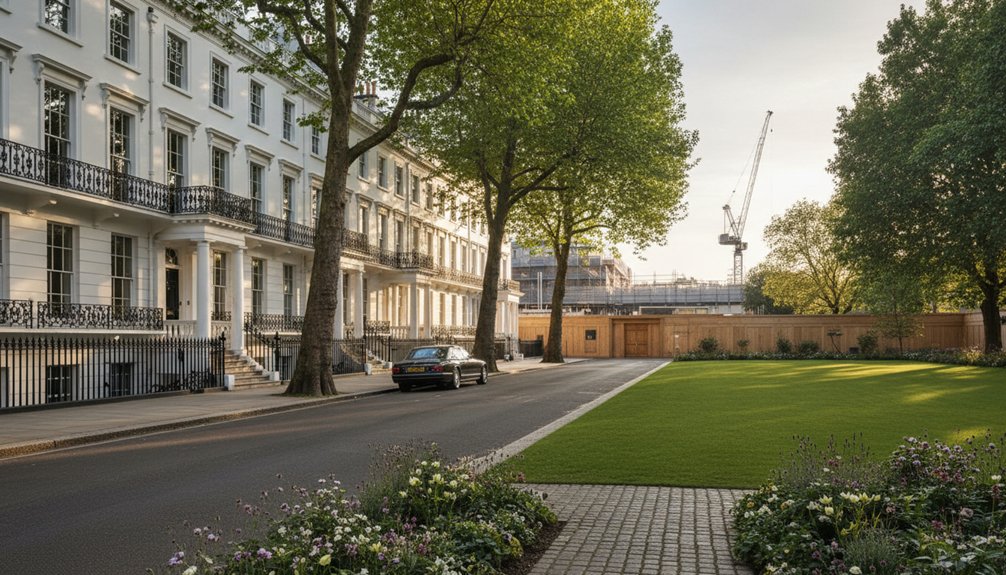
You may not realise that Kensington’s heritage status can protect a property’s character while also limiting how you renovate it. That tension is central to evaluating premium homes in the area. You’ll find enduring appeal in its architecture, gardens, amenities, and constrained supply, but purchase costs, refurbishment rules, and ongoing maintenance demand careful scrutiny. To judge whether Kensington suits your investment strategy, you’ll need to weigh prestige against practicality, value against risk, and charm against complexity.
Key Takeaways
- Kensington’s heritage architecture, cultural significance, and limited land supply support enduring premium-property demand.
- Luxury homes can deliver capital growth, premium rents, or both, depending on market conditions and property quality.
- Strongest opportunities often involve well-proportioned period properties offering thoughtful modernization rather than extensive reconstruction.
- Heritage restrictions, refurbishment costs, taxes, maintenance, and specialist craftsmanship can significantly reduce investment returns.
- Investors should commission surveys, verify planning controls, compare recent sales, and model conservative costs, income, and resale assumptions.
Is Kensington a Good Investment?
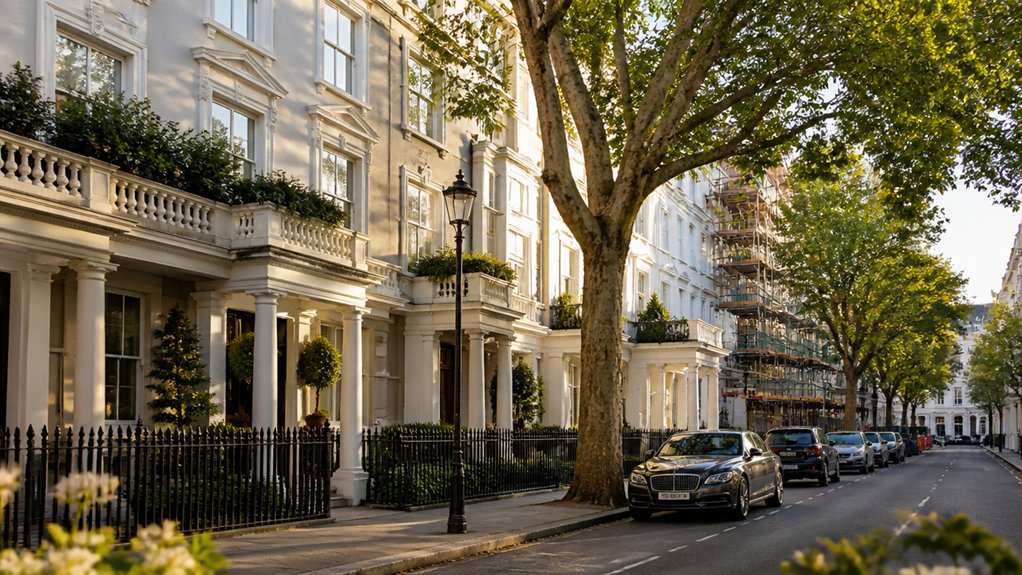
Kensington can be a strong property investment for buyers who value heritage character, renovation potential, and enduring market appeal. You’ll find that Historical trends support the suburb’s resilience, with established homes benefiting from limited land supply and consistent demand.
Its Cultural significance also strengthens long-term identity, particularly where terraces, villas, and period streetscapes remain carefully protected.
Before you commit, assess each property’s structure, planning controls, and upgrade requirements. Heritage restrictions may shape extensions, façades, materials, and energy improvements, so obtain professional advice early.
You’ll also need to compare sale evidence, rental performance, insurance costs, and likely renovation margins rather than relying on presentation alone. Well-researched improvements can free up value, but overcapitalising remains a risk.
Kensington suits you best when you take a patient, numbers-led approach and respect the suburb’s architectural character.
Why Do Buyers Choose Kensington Luxury Property?
For buyers seeking more than investment fundamentals, Kensington luxury property offers heritage character, refined streetscapes, and the scope to create a highly individual home. You’ll find period terraces, grand villas, and architect-designed residences where original detailing can sit comfortably beside contemporary upgrades.
High ceilings, stonework, fireplaces, and generous proportions provide a strong foundation for thoughtful renovation, while discreet technology and Luxury amenities support modern living.
Kensington’s Historical significance adds depth beyond appearance, connecting your home to established architecture, garden squares, and a carefully protected streetscape.
You can also enjoy a compelling lifestyle: excellent transport, celebrated dining, cultural destinations, and green spaces remain close at hand.
For discerning buyers, the appeal lies in combining authenticity with comfort, creating a residence that feels both rooted and distinctly personal.
Which Kensington Homes Offer the Best Value?
Value in Kensington isn’t limited to the grandest address; it often lies in well-proportioned period homes with sound structure, original features, and realistic scope for improvement. Look for terraces, garden squares, and upper-floor apartments where Historic architecture adds character without demanding a premium for every Luxury amenity.
You’ll often find stronger value in homes needing thoughtful modernisation rather than complete reconstruction: original fireplaces, high ceilings, and generous room proportions can support a distinctive renovation. Compare natural light, layout, communal upkeep, and lease terms as carefully as postcode prestige.
Properties close to transport, parks, and respected schools can offer enduring appeal while avoiding the highest entry points. A survey should confirm that period charm isn’t masking structural complications, damp, or restrictive consent requirements before you commit.
What Are the Costs, Returns, and Risks?
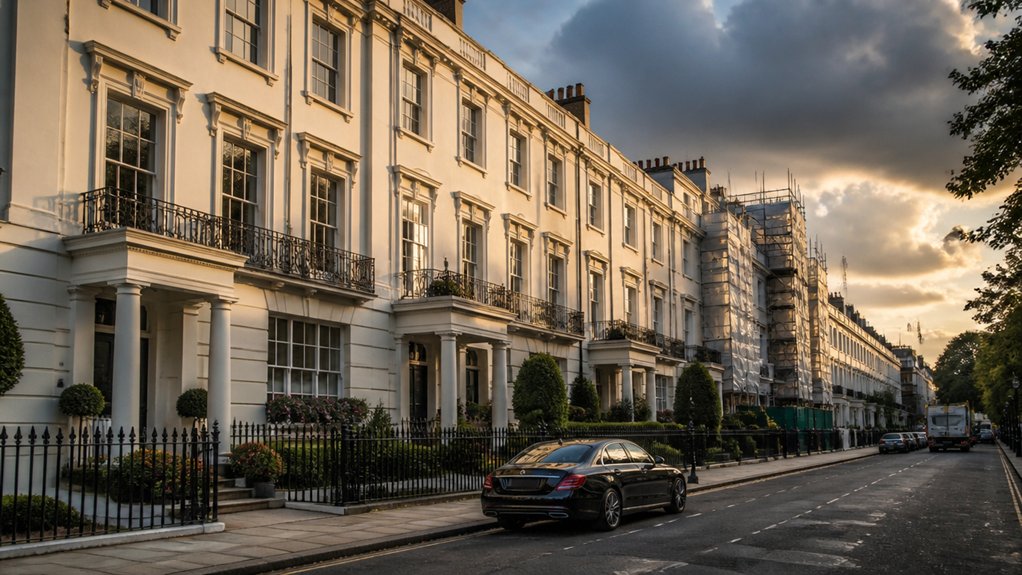
What’ll your Kensington property really cost once purchase taxes, legal fees, survey work, financing, refurbishment, and ongoing maintenance are included?
Grade II-listed façades, period joinery, and conservation requirements can make restoration materially dearer than standard renovation. Build a realistic contingency for hidden damp, ageing services, roof repairs, and specialist craftsmanship.
Your returns may come through long-term capital growth, premium rents, or both, but neither is guaranteed. Market trends can shift with interest rates, employment patterns, and international demand, while demographic shifts may favour larger family homes, secure pied-à-terre apartments, or flexible layouts at different times.
Kensington’s blue-chip reputation can soften volatility, yet liquidity, tax changes, vacancy periods, tenant damage, and refinancing costs remain genuine risks.
Protect your margin by modelling conservative income, costs, and resale assumptions before committing capital.
How to Assess and Buy Kensington Property?
Before you view a Kensington property, define your brief, budget, and tolerance for restoration risk. Decide whether you want period character, turnkey comfort, or scope to reconfigure rooms.
Compare asking prices with recent, like-for-like sales, allowing for lease length, service charges, and local taxes.
Inspect the façade, roof, windows, damp, plumbing, electrics, and any listed-building restrictions; commission a survey before you commit.
Check planning history and confirm that proposed alterations suit conservation requirements.
Assess daylight, noise, parking, storage, and access, rather than relying on photographs.
Luxury amenities can strengthen appeal, but they shouldn’t disguise poor proportions or costly maintenance.
Research the neighborhood reputation, transport links, schools, and tenant demand to test resale prospects.
Negotiate from documented defects, then instruct a specialist conveyancer to scrutinise the title, lease, rights, and completion conditions.
Conclusion
Kensington can be an excellent choice for premium property investment when you value heritage, scarcity, and enduring demand. You’ll find elegant period homes, but you’ll also need to budget carefully for conservation approvals, specialist renovation, and ongoing maintenance. Compare streets, building condition, rental prospects, and resale appeal before committing. In a market where quality endures, why settle for ordinary? With diligent research and expert guidance, you can secure a distinguished Kensington asset built for long-term value.